


This original weight loss technique was developed almost 100 years ago.Its main goal was not weight loss, but a way to combat epileptic seizures in children.As a result of clinical trials, American doctor Russell Wilder obtained surprising results: fasting helps prevent status epilepticus.
Along the way, the process of ketosis, the body's natural way of survival, was studied.In the complete absence of food, the liver begins to burn fat reserves.As a result, ketones are formed - organic compounds whose composition resembles carboxylic acids.The body uses them instead of carbohydrates and the person loses weight quickly.
Wilder's system was not used for long, as epilepsy medications were invented.The idea of the keto diet was revived in 1994, when an entire foundation was created in the United States to study it.Now the technique is especially popular.It allows to normalize the metabolism, altered by the “Western diet”, composed of two-thirds of simple carbohydrates and sugars.
The ketogenic (ketone) diet, on the other hand, involves a sharp reduction in carbohydrates and an increase in fat.As metabolism changes, body weight decreases rapidly.
Ketogenic diet: main types and rules.
The ketone nutrition system is an imitation of the starvation state, in which fats are burned instead of carbohydrates.The brain perceives fatty acids and ketones as energy sources instead of the usual glucose.
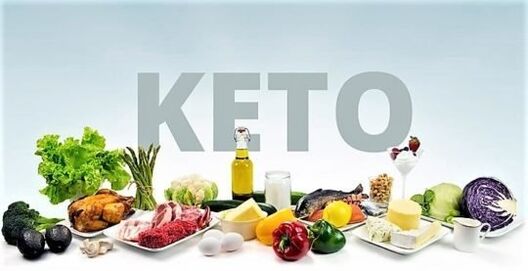
There are 4 types of ketogenic diet:
- Classic.It is designed to get rid of excess weight.A person should get 75% of calories from fat, 25% from protein foods, and only 5% from carbohydrates.
- Addressed.By burning fat reserves, ketones preserve amino acids - the main "building material" of muscles.A high-fat diet helps athletes quickly build muscle mass.Carbohydrates are taken only once a day, half an hour before training.
- Cyclic.It is used by bodybuilders and strength athletes.Nutrition is carried out in cycles: 5 days of ketogenic diet, then 2 days with carbohydrates (up to 600 g of complex carbohydrates per day).
- Anticancer.In a state of ketosis, healthy cells obtain energy from fats.Tumor cells do not have this ability, so they gradually die.The technique involves complete fasting for 2-3 days and then a diet of 600-1000 kcal per day.
The key principle of the classic ketogenic diet is to reduce carbohydrates to 20 g per day.Additionally, the following rules must be observed:
- drink plenty of water;
- eat until the feeling of hunger is completely satisfied;
- add more salt to your diet;
- Eat foods with protein and carbohydrates along with fats.
What can you eat on the ketogenic diet?
The majority of a ketogenic diet should consist of monounsaturated fatty acids, Omega-3 and Omega-6 fats.Below are examples of products for a ketogenic menu:
- olive oil;
- coconut oil;
- cashews;
- almond;
- pistachios;
- lounge;
- pine nuts;
- pumpkin and sunflower seeds;
- Brie;
- Cheddar;
- feta cheese;
- cottage cheese (fat content not less than 18%);
- butter;
- sour cream (fat content from 20%);
- thick cream.
The second component of the ketogenic diet is protein.They are necessary to develop muscles and connective tissue.But excess protein is quickly converted into glucose.Therefore, protein food in the diet should be 105 to 120 g, depending on body weight.
Favorite products:

- poultry meat (turkey, chicken, duck);
- fatty beef in the form of steaks, stews or minced meat;
- pork chops, ham, steak;
- mutton;
- offal (liver, tongue, kidneys);
- sea fish (tuna, cod, salmon, catfish, trout, halibut);
- seafood (crabs, mussels, clams);eggs (boiled, omelet, fried eggs).
For carbohydrate foods, you should choose vegetables that are low in carbohydrates and high in fiber.Examples of healthy carbohydrate foods:
- broccoli;
- French beans;
- white cabbage;
- celery;
- cauliflower;
- garlic;
- cucumbers;
- lettuce;
- onion;
- radish;
- mushrooms (mushrooms, shiitake, chanterelles).
Fruits and berries can be included in the menu only occasionally, in small quantities.Blackberries, blueberries, cherries, currants, raspberries, strawberries and melons are allowed.The only exception is avocado, which is high in fat and can be consumed frequently.
Recommended drinks include plain and mineral water, unsweetened coffee, black and green tea, and diet cola.Strong alcohol is allowed in moderation: vodka, cognac, whiskey.
Foods to avoid on a ketogenic diet
Certain foods inhibit the production of ketones, which slows down the fat burning process.First of all, these are cereals and legumes.The ketogenic diet involves completely avoiding wheat, oats, barley, rice, rye, buckwheat, and corn.From legumes, white and red beans, lentils, peas and black beans should be excluded.

Fruits are rich in sugars, so they are also incompatible with the ketogenic diet.Among them:
- bananas;
- pineapples;
- papaya;
- oranges;
- apples;
- grape;
- tangerines;
- mango;
- dates.
Therefore, fruit juices and syrups are excluded.
Root vegetables containing a lot of sugar and starch (potatoes, carrots, beets, sweet potatoes) are also prohibited.As for protein foods, it is necessary to avoid industrially processed meat: canned meats, sausages, sausages and low-fat dairy products.
Although fats make up the majority of a ketogenic diet, there are some oils you should avoid.Soybean, corn, peanut, and sunflower oils slowly convert to ketones and promote internal inflammation.And finally, products containing flour and sugar, sweet drinks, wine, beer and spirits are completely contraindicated.
The effectiveness of the ketogenic diet for weight loss
A sharp reduction in carbohydrates and an increase in the proportion of fats leads to a restructuring of the metabolism.First, the body begins to consume carbohydrates stored in the liver.During this process, the water accumulated in the tissues is eliminated.Then the fat deposits are gradually burned.
The ketone diet encourages the person to eat whole foods without industrial processing.The main “culprit” of the growth of adipose tissue, sugar, disappears from the diet.Healthy fats produce sustained levels of energy, eliminating the need for high-calorie snacks.Additionally, the ketogenic diet creates a long-lasting feeling of satiety.The intervals between meals increase to 4-6 hours.

Getting into ketosis takes anywhere from a week to a month.During this time, as clinical studies show, a person is able to lose up to 9 kg of weight, while conventional low-calorie diets give a result of 4.5 kg.
Example of a ketogenic diet menu for a week.
A well-thought-out plan helps you quickly integrate into a new nutritional system.At first you have to create a weekly menu with the correct proportion of fats, proteins and carbohydrates.
An example option is presented in the table:
| Day of the week | Breakfast | Lunch | dinner |
| Monday | Scrambled eggs with ham, cheddar cheese and spinach | Tomato, lettuce and bacon salad, dressed with natural mayonnaise | Baked fish with olive oil and vegetables (green beans or cauliflower) |
| Tuesday | Scrambled eggs and bacon | Tuna salad with avocado and romaine lettuce, dressed with mayonnaise | Beef chops stuffed with cheese |
| Wednesday | Omelet with grated cheese | Chicken salad with avocado, dressed with mayonnaise | Meatloaf with mushrooms and onion |
| Thursday | Hard-boiled eggs with sour cream and parsley | Baked salmon and fresh spinach, red onion and tomato salad dressed with olive oil and vinegar | Cabbage stew with beef, onion and red pepper in olive oil |
| Friday | Scrambled eggs and whole milk cocktail with stevia | Stewed turkey garnished with zucchini fried in olive oil | Boiled beef with sour cream sauce |
| Saturday | Hard boiled eggs and cocoa with whole milk | Chicken, tomato, hard cheese, pistachio and herb salad, with whole yogurt dressing | Roasted pork with broccoli |
| Sunday | Baked eggs with avocado | Boiled chicken with hummus and lettuce | Pork casserole with cheese, onion and bell pepper |
Pros and cons of the ketone diet

In addition to weight loss, the ketosis process provides great benefits for mental abilities.With a normal diet, the brain gets its main “fuel,” glucose, from carbohydrate foods.In the absence of carbohydrates, the liver produces glucose from amino acids, glycerol contained in fats and lactic acid.Additionally, energy reaches the brain from ketones.These substances improve memory and concentration and slow the development of Alzheimer's disease.
There are a number of other benefits of the ketogenic diet:
- cleanse the skin from acne;
- disappearance of sugar addiction;
- elimination of heartburn;
- decreased blood sugar levels;
- stabilization of blood pressure;
- increased muscle mass;
- increased resistance;
- reducing the risk of cancer.
However, the ketogenic system has 5 major disadvantages:
- Long adaptation process.It takes about 1 to 2 weeks before ketosis begins.During all this time, the person experiences discomfort associated with changes in metabolism.
- Low energy level for sports.Participants in games and combat sports need more powerful bursts of energy.
- Vitamin and mineral deficiency.Since the diet excludes many healthy foods, it is necessary to replace them with the help of dietary supplements.
- Bad breath.Your breath smells like one of the main ketones: acetone.
- Fatigue.During adaptation, you often feel tired and dizzy.
- Persistent constipation.They are caused by an insufficient amount of plant fiber.